- Credential Phishing
Attack Types
BEC/Fraud
Callback Phishing
Credential Phishing
Extortion
Malware/Ransomware
Reconnaissance
Spam
Tactics and Techniques
Encryption
Evasion
Exploit
Free email provider
Free file host
Free subdomain host
HTML smuggling
ICS Phishing
Image as content
Impersonation: Brand
Impersonation: Employee
Impersonation: VIP
IPFS
ISO
LNK
Lookalike domain
Macros
OneNote
Open redirect
Out of band pivot
PDF
Punycode
QR code
Scripting
Social engineering
Spoofing
Detection Methods
Archive analysis
Content analysis
Computer Vision
Exif analysis
File analysis
Header analysis
HTML analysis
Javascript analysis
Macro analysis
Natural Language Understanding
Optical Character Recognition
OLE analysis
PDF analysis
QR code analysis
Sender analysis
Threat intelligence
URL analysis
URL screenshot
Whois
XML analysis
YARA
Attack Type: Credential Phishing
Credential phishing attacks are designed to steal your login information by tricking you into entering it on fake login pages. These emails impersonate trusted services like Microsoft 365, Google Workspace, or banking sites, using urgent phrases like “verify your account,” “prevent suspension,” or “view shared document” to push you into clicking.
Once you click the link, it leads to a fake login page that looks convincing. If you enter your credentials, the attacker captures them immediately. Common examples include phishing emails pretending to be DocuSign requests, Dropbox links, or HR file shares—things that feel routine but create a false sense of urgency.
Attackers often use real platforms like Microsoft Forms, Google Forms, or compromised websites to host these fake login pages, making the links appear legitimate and harder for security tools to catch. The damage doesn’t stop at just stealing your login. Once attackers gain access, they can move through your organization, steal sensitive data, send internal phishing emails, or even launch a ransomware attack.
Blog Posts
Tax season email attacks: AdWind RATs and Tycoon 2FA phishing kits · Blog · Sublime Security
Credential phishing Charles Schwab account holders with 2FA bypass · Blog · Sublime Security
Detecting malicious AnonymousFox email messages sent from compromised sites · Blog · Sublime Security
Talking phish over turkey · Blog · Sublime Security
Hidden credential phishing within EML attachments · Blog · Sublime Security
Living Off the Land: Credential Phishing via Docusign abuse · Blog · Sublime Security
Living Off the Land: Callback Phishing via Docusign comment · Blog · Sublime Security
Scripting Vector Grifts: SVG phishing with smuggled JS and adversary in the middle tactics · Blog · Sublime Security

Email Topic Modeling: Simplifying detection with ML-powered granularity · Blog · Sublime Security
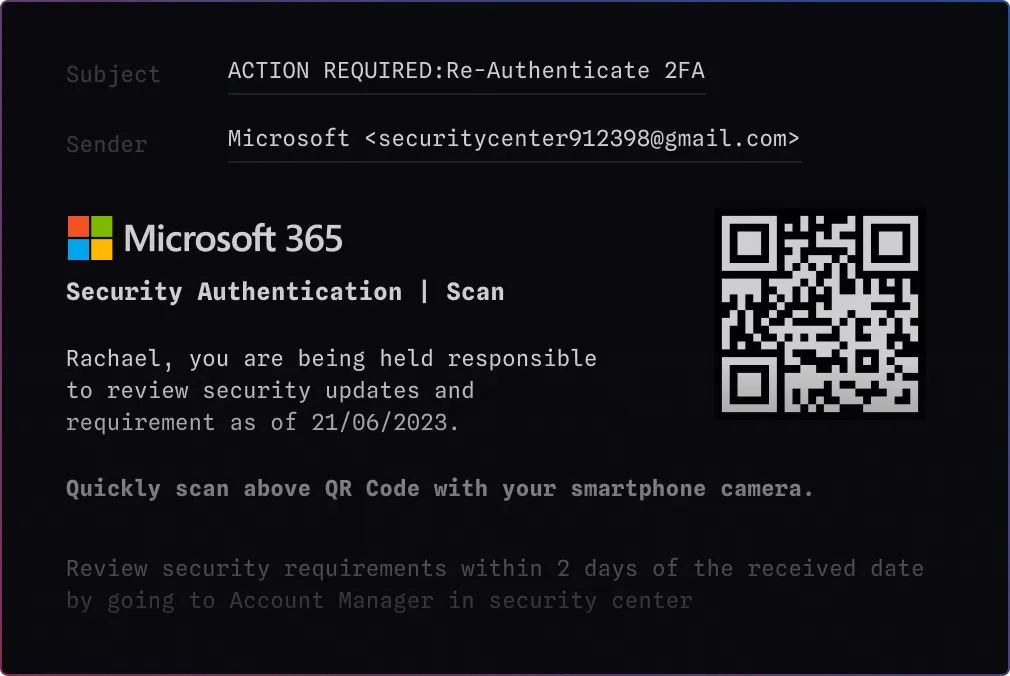
QR Code Phishing: Decoding Hidden Threats · Blog · Sublime Security
Tactics & Techniques (24):
Impersonation: Brand
Social engineering
Lookalike domain
Spoofing
Evasion
Impersonation: Email address
PDF
HTML smuggling
Free file host
Impersonation: Domain
QR code
ICS Phishing
Open redirect
Encryption
Impersonation: VIP
Impersonation: Employee
Free subdomain host
Image as content
Out of band pivot
Free email provider
Scripting
OneNote
Exploit
Macros
Detection Methods (20):
Content analysis
HTML analysis
URL analysis
Computer Vision
Header analysis
Sender analysis
Optical Character Recognition
Natural Language Understanding
File analysis
Exif analysis
YARA
QR code analysis
Whois
XML analysis
Javascript analysis
Threat intelligence
URL screenshot
Archive analysis
Macro analysis
Attachment analysis
Page 1 of 25